ServicesCalcium Removal and Tile Cleaning
Calcium Removal and Tile Cleaning in Phoenix
As pool water evaporates, its minerals stay behind on the tile and build a chalky white or glassy gray band at the waterline. We identify which type of scale you have, choose a removal method your tile can tolerate, and explain why the deposit formed.
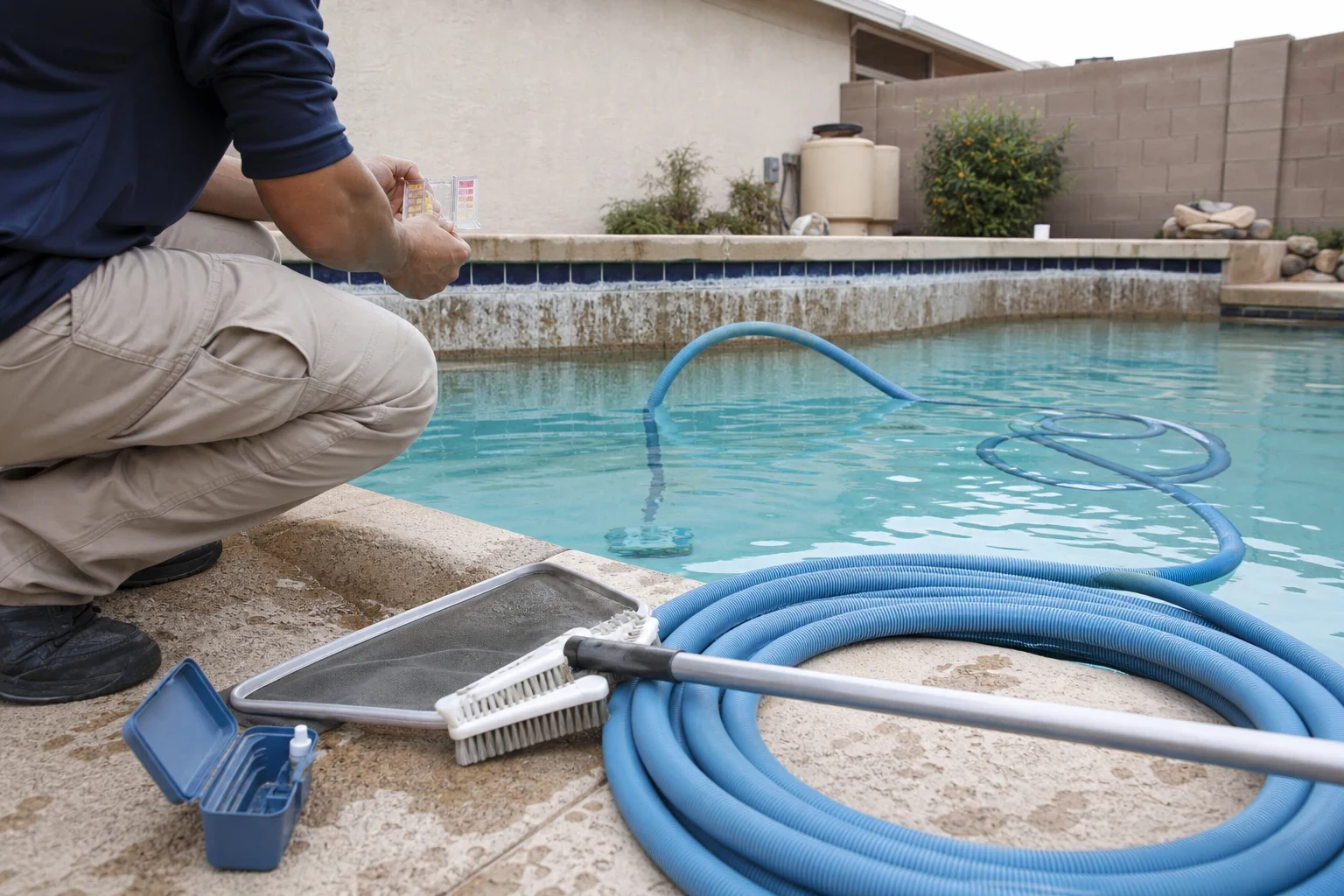
What Calcium Buildup Is and How We Remove It
Pool water carries dissolved calcium. When water evaporates at the waterline, the water leaves and the minerals stay. Hot, dry summers speed this up, and refilling with hard tap water keeps adding more calcium. Over months, that residue hardens into a band on the tile and sometimes on rock features and spillways.
There are two kinds, and the difference decides the method. Calcium carbonate is white, chalky and often flakes under a fingernail. Calcium silicate is grayer, glassy and much harder, usually the result of years of buildup. Carbonate often comes off with a scale remover and hand work. Silicate usually needs media blasting, where fine abrasive is blown against the tile to break the deposit without grinding the glaze.
We tell you which one you have before any work starts, and what each removal option means for your tile. If the problem is wider than the waterline, such as stains across the plaster, we will say so and explain whether an acid wash makes more sense.
What the Service Covers
Scale and tile identification
We test the deposit and check your tile type. Glass, glazed porcelain and natural stone each tolerate different methods, and pumice that is fine on porcelain will scratch glass tile.
Media blasting for hard scale
For calcium silicate we use low-pressure blasting with a fine abrasive. It takes off the mineral layer while leaving the tile face and grout intact.
Chemical and hand removal for light scale
Soft carbonate deposits often respond to a mild scale remover and nylon or pumice work, depending on the tile. This is slower but gentle on delicate surfaces.
Grout and coping edge check
Scale can hide cracked grout or loose tiles. We note anything we find and photograph it so you can see it yourself, and pool repair is available if a tile needs resetting.
Water balance afterward
We test calcium hardness, pH and alkalinity and explain how they relate to scaling. Water that is balanced to dissolve rather than deposit calcium is the best way to slow new buildup.
Signs Your Tile Needs Calcium Removal
A white line that survives scrubbing
If a brush and sponge leave the band right where it was, the minerals have fused to the glaze. Routine brushing will not lift it.
Rough gray patches
A gritty, gray texture usually points to calcium silicate. The longer it stays, the harder it gets to remove.
Crust on rock features or spillways
Water spread thin over a feature evaporates faster than the main pool, so scale tends to show up there first.
Tile that has lost its shine
A thin mineral film dulls glass and glazed tile before any distinct line appears.
Buildup that returns fast
Quick regrowth after a cleaning points to high calcium hardness or pH, not just dirty tile. That balance issue is worth fixing along with the cleaning.
What Happens on Cleaning Day
- 1
Look first, then agree on a method
We check the deposit, the tile and the grout lines, then explain which method we plan to use and why it fits your tile. Work starts only after you approve it.
- 2
Drop the water level if blasting
Media blasting works best on dry tile, so we may lower the water a few inches below the tile band. We protect the pump and skimmer so nothing runs dry.
- 3
Take off the deposit
We move around the pool one stretch at a time and stop to check the tile face as we go. Any abrasive that lands in the water gets vacuumed out.
- 4
Rinse, refill and rebalance
The tile is rinsed, the pool is topped back up and the water is tested. Fill water brings in fresh calcium, so we adjust the chemistry after refilling.
- 5
Clean the deck and walk through
We sweep up the abrasive and show you the finished tile, plus photos of any cracked grout or loose tile we spotted.
What Moves the Price of Scale Removal
Two things drive most of the cost: how much mineral has built up and how hard it has set. We look at the deposit before quoting, then give you the number by phone or at the pool with the method written out. That way you know exactly which work the price covers.
- Scale type and depth
- A thin carbonate film comes off faster and uses less material than a thick silicate crust. Buildup that has been left for several years adds labor.
- Length of the tile line
- More perimeter means more surface to clear. A wide tile band, an attached spa or raised walls all add to the total.
- What your tile is made of
- Glazed porcelain handles firmer methods. Glass and natural stone call for softer media or slower handwork, which takes longer.
- Features and access
- Rock waterfalls, sheer descents and tight corners need extra detail work. A narrow side yard can change how we set up the blasting equipment.
Questions About Scale on Pool Tile
Something not covered here? (602) 883-2314
Can media blasting scratch my tile?
It should not if the media and pressure suit the surface. We run fine abrasive at low pressure and try a small test spot before doing the whole line. For glass tile or softer stone we may switch to a gentler media or work by hand.
Does the pool need to be drained for this?
No. In most cases we only drop the level a few inches under the tile. Draining is for work on the whole interior surface, which is what pool drain and refill or an acid wash covers.
How soon will the white line return?
It depends on your water chemistry and how much fresh fill water goes in. When calcium hardness, pH and alkalinity stay in a balanced range, new scale forms far more slowly. Brushing the tile during weekly pool cleaning also catches early film before it hardens.
Is a pumice stone safe to use myself?
On glazed porcelain, a wet pumice stone with light pressure can take off soft carbonate. On glass tile it will leave fine scratches you cannot polish out. Hard silicate deposits rarely give way to pumice at all.
Does calcium buildup mean something is broken?
Usually not. Scale at the waterline comes from evaporation and water balance. Heavy scale inside a heater or salt cell is a separate issue, and we can look at that equipment while we are there.
Get a Clear Answer on Your Waterline
Describe the crust on your tile and roughly how long it has been there. We will tell you which type of scale it probably is and what taking it off would involve.