ServicesEquipment Installation
Pool Equipment Installation in Phoenix
New pumps, filters, heaters, salt cells and automation controllers, fitted to the equipment pad at your home. Before a single part is ordered, we walk you through what each option does, what it costs to run and why one size suits your pool better than another.
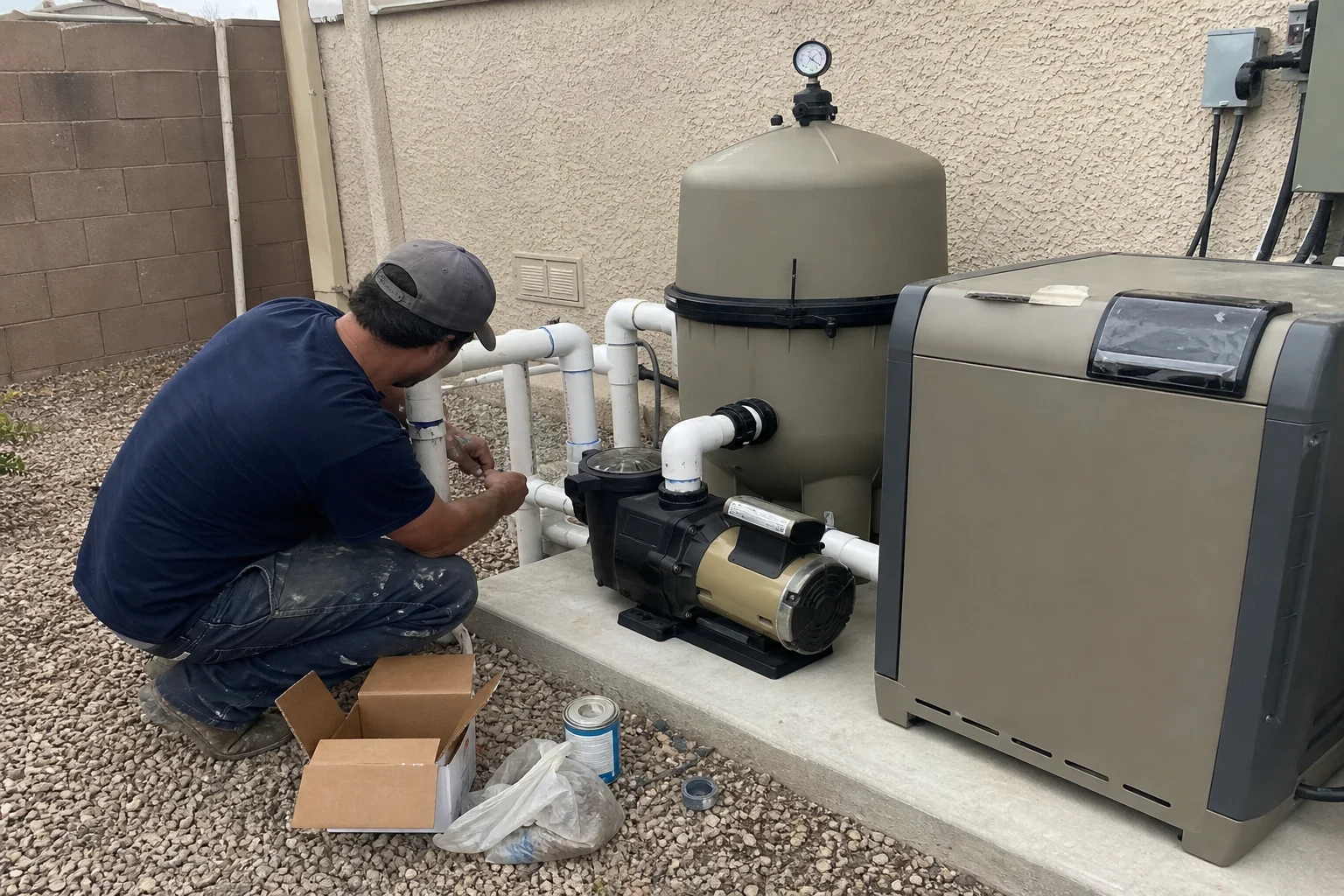
What equipment installation covers
Your equipment pad is the working heart of the pool. The pump moves water, the filter catches debris, and the heater or salt cell does its job only if water reaches it at the right flow rate. When one part is undersized or worn out, the others work harder and wear faster.
We replace failed equipment and add new pieces to existing systems. We start by reading the labels on what you have, measuring pipe size and estimating your pool's volume. Then we tell you plainly which options make sense and which would be money spent for little gain.
If a part can still be fixed, our pool repair service may be the better call, and we will say so.
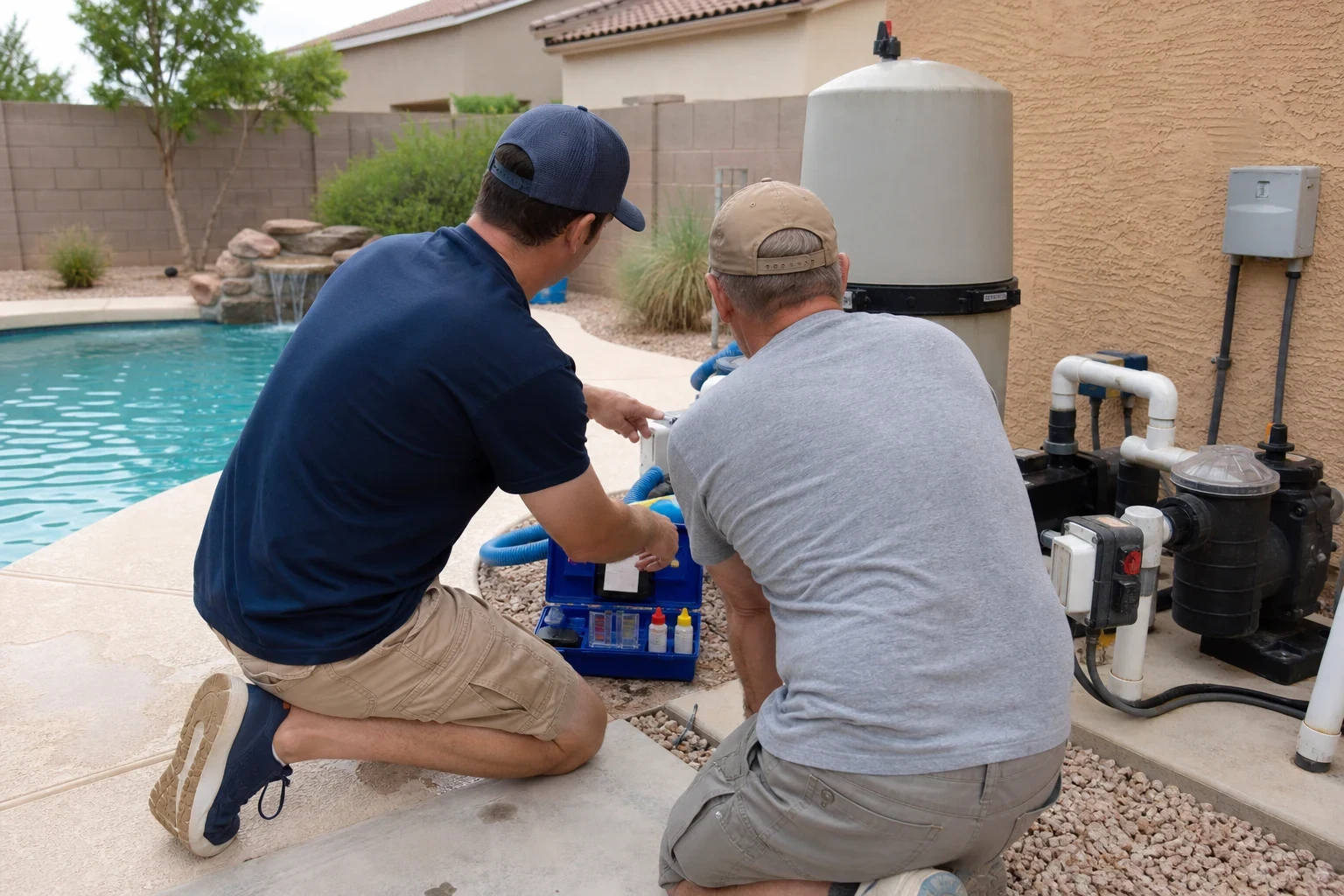
Equipment we install
- 01
Variable-speed pumps
Federal efficiency rules now steer most replacement filter pumps toward variable-speed models. They run long hours at low RPM, which moves the same water for far less electricity and runs quieter. We set the speed schedules so filtration, cleaning and heating each get the flow they need.
- 02
Cartridge, sand and DE filters
Each filter type traps debris differently. Sand is simple but filters coarser, cartridges filter finer and save water because they need no backwashing, and DE filters finest of all but take more upkeep. We explain how each one behaves with the fine dust our monsoon storms drop into pools.
- 03
Gas heaters and heat pumps
Gas heaters warm water quickly regardless of air temperature. Heat pumps cost less to run but slow down as nights get cold. We size either one to your pool's surface area and how you actually swim.
- 04
Salt chlorine generators
A salt cell makes chlorine from dissolved salt as water passes through it. Hard water leaves calcium scale on the cell plates, so we size the cell with headroom and show you how to check it.
- 05
Automation and booster pumps
Automation controllers run pumps, lights and heaters on schedules you can change. Pressure-side cleaners often need a separate booster pump, and we plumb and wire it to run only when the main pump is on.
Questions about Equipment Installation?
Call(602) 883-2314When equipment is ready to replace
Grinding, screeching or humming
A pump that grinds or squeals usually has worn motor bearings. If it hums but the shaft does not turn, a failed capacitor or seized motor is the likely cause. With bearings gone, a new motor or a new pump generally makes more sense than a rebuild.
A crack in the filter tank
Years of sun and repeated pressure cycles make plastic filter housings brittle. A thin crack can burst open once the system is pressurized, which is why a cracked tank gets replaced rather than patched.
A heater that keeps shutting down
Frequent ignition lockouts, soot on the burners or corrosion on the heat exchanger point to a heater at the end of its life. We weigh whether a repair is still worth the money before pricing a replacement.
Electric bills creeping up
An older single-speed pump running at full speed for eight hours a day is often the largest power draw on the pad. Moving to a variable-speed pump is one of the few changes that can lower that cost in a way you notice.
Recurring salt cell warnings
When low output warnings come back even after a cleaning, the plate coating has probably worn away. Cells wear out with run hours, and any replacement has to be compatible with your controller.
How an install day runs
- 1
Phone quote and pad visit
On the call, you tell us what stopped working or what you would like to add, and we pick a time to inspect the pad. During the visit we record pipe diameter, available voltage, gas supply and clearance around the equipment.
- 2
Options in writing
We lay the choices out next to each other, covering what each unit does, how its running cost compares and a line-item price. When a job calls for a new gas line or electrical circuit, we let you know up front whether a permit is involved.
- 3
Old unit out, new unit plumbed
The circuit gets switched off at the panel and the water is drained from the lines before the old equipment comes off the pad. We take it away with us. Cracked or stuck unions and valves are replaced with new ones as the new unit is plumbed in.
- 4
Startup and handoff
We prime the pump, read the filter pressure and make sure the heater or salt cell is getting enough flow to operate. Before we leave, you see how the controls work, what clean filter pressure looks like and which warning signs matter.
What moves the price
Equipment costs vary more than most pool work because the parts themselves range widely. The labor depends on how much your pad needs to change to fit the new unit. Your quote lists each item so you can see where the money goes.
- The equipment you choose
- A variable-speed pump, heat pump or full automation system costs more up front than a basic model. We explain what you get back in running cost or convenience.
- Replumbing at the pad
- A new unit rarely lines up with the old pipes. Rerouting PVC, adding check valves or upsizing pipe adds time and material.
- Electrical and gas work
- Adding a dedicated circuit for a heat pump or extending a gas line for a heater is separate work, and it may need a permit and inspection.
- Pool size
- Larger pools need bigger filters, larger heaters and higher-output salt cells.
Equipment installation questions
Should I repair my pump or replace it?
If only the capacitor or shaft seal has failed, a repair is usually the better value. If the motor bearings are gone or the pump is an old single-speed model, replacing it with a variable-speed pump often pays back through lower power use. We give you both numbers so you can compare.
Is a bigger pump always better?
No. An oversized pump can push water through the filter and heater faster than they are rated for, which wastes power and can damage parts. The right pump matches your pipe size, filter rating and pool volume.
Which filter is best for my pool?
It depends on how much upkeep you want. Cartridge filters are common here because they filter finely and need no backwashing, which saves water. DE filters clean finest but take more care, and sand is the simplest to live with.
Can you switch my pool to salt?
Yes. We install the cell and controller, then balance the water and add salt to the level the cell needs. We explain how salt affects stone coping and older metal parts, so you know what to expect.
How long does an install take?
A straight pump or filter swap is often done in a few hours. Heaters, salt systems and automation take longer, especially when new gas or electrical work is involved, and we give you a time estimate with the quote.
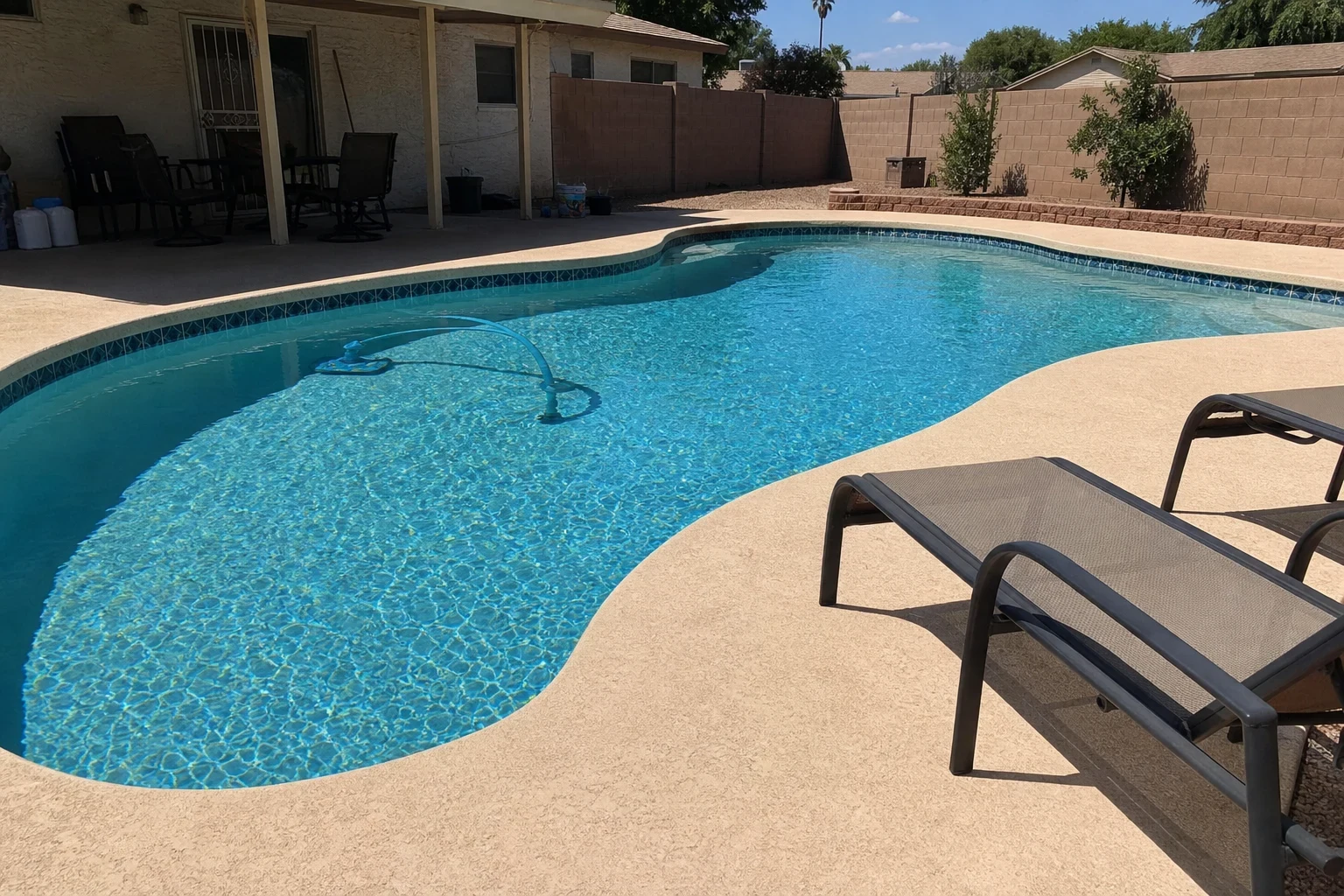
Get clear answers on new equipment
Describe the noise, the error code or the upgrade you have in mind. We come out to inspect the pad, lay out each option in plain terms and put the price in writing before any work starts.