ServicesPool Drain and Refill
Pool Drain and Refill in Phoenix
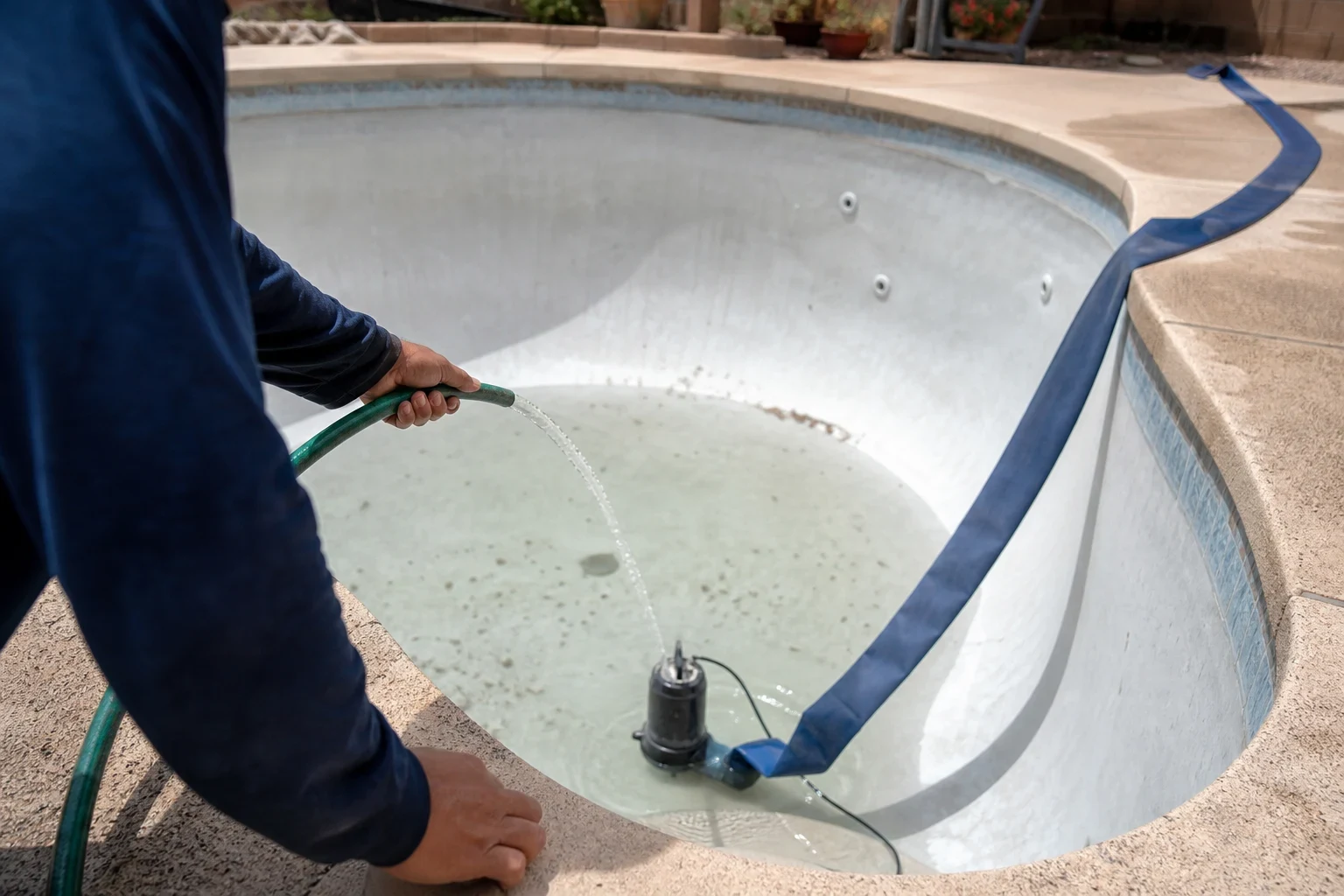
Old pool water fills up with dissolved minerals and stabilizer until chlorine and pH adjustments barely work. We drain it to the right discharge point, look over the empty shell, refill and balance the fresh water. We also explain why it was needed.
What a drain and refill fixes
Evaporation takes only water and leaves everything dissolved in it behind. Calcium, salts and cyanuric acid (the stabilizer packed into chlorine tablets) get more concentrated each month, and no chemical you pour in removes them. Once total dissolved solids (TDS) get high enough, chlorine loses its punch, white scale builds up on tile and inside the heater, and the water looks flat even with test strips reading normal.
Swapping out the water starts the chemistry over. This isn't routine maintenance. Most pools in the area need it once every few years, more often with heavy tablet use or a salt system. We check calcium hardness, TDS and cyanuric acid before recommending anything, so you know whether draining is truly needed or a chemical adjustment will handle it.
What the job includes
- 01
Testing first
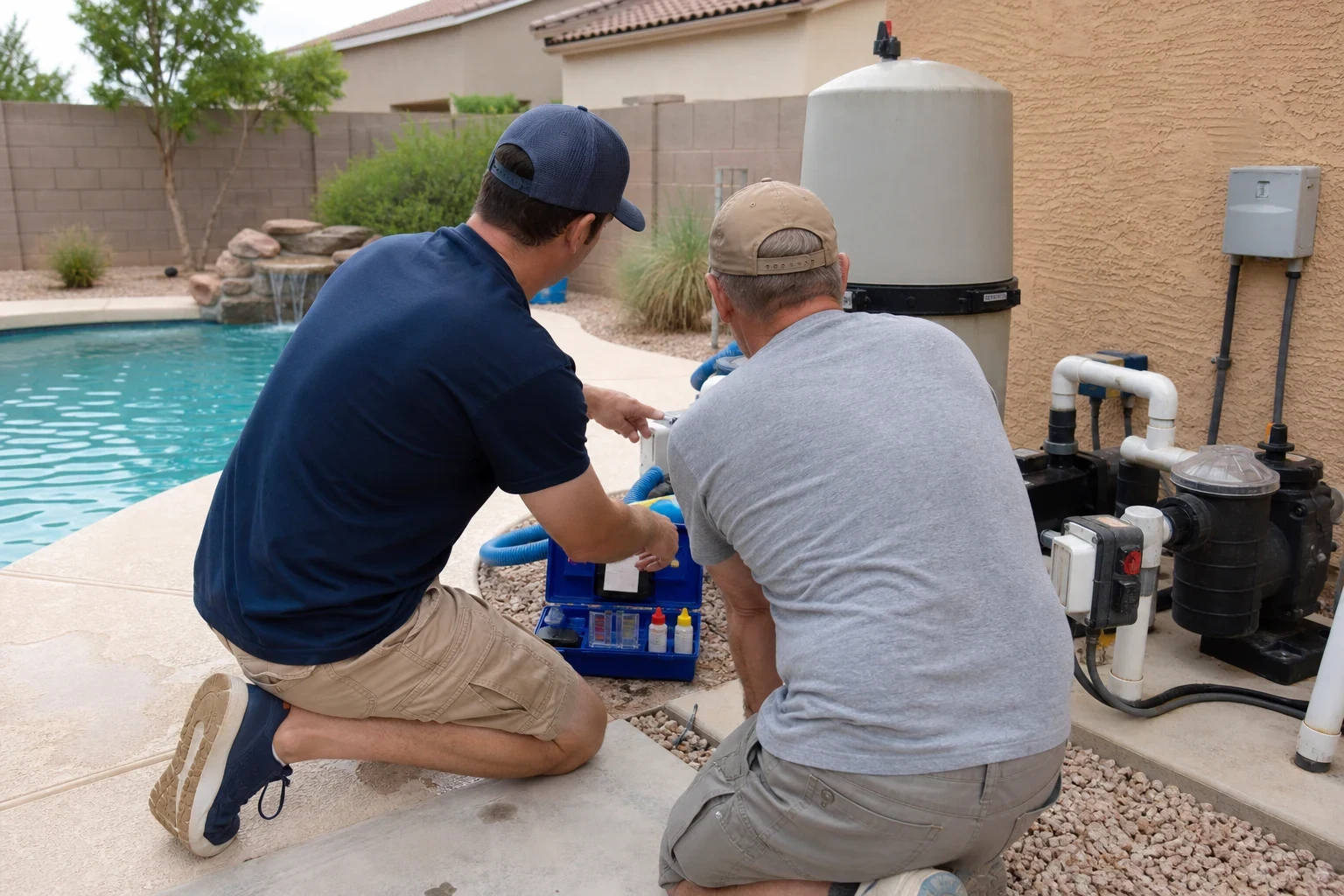
Before any water leaves the pool, we read TDS, stabilizer and hardness levels, plus salt on salt pools. When those readings say draining isn't needed, you hear that from us.
- 02
Pumping to the right discharge point
A submersible pump sends the water into your home's sewer cleanout, which most cities around here want used in place of the street or storm drain. We check your city's rule first.
- 03
Hydrostatic valve check
In most in-ground pools, a relief valve in the main drain opens to let groundwater in so the empty shell can't lift. We confirm it is free of debris and sitting properly before the refill begins.
- 04
Empty shell inspection
Draining exposes things water hides: cracked or delaminating plaster, loose tile, worn return fittings. We photograph them and explain in plain terms what each one means for you.
- 05
Refill and start-up chemistry
Alkalinity and pH get adjusted first, then calcium hardness, then stabilizer and chlorine. Following that sequence stops soft new fill water from etching the plaster early on.
- 06
Equipment restart
We prime the pump, bleed air out of the filter and make sure the heater, salt cell and automation all start up as they should.
Questions about Pool Drain and Refill?
Call(602) 883-2314Signs your water needs replacing
Chlorine disappears or does nothing
High cyanuric acid locks up free chlorine. You keep adding it and still fight cloudy water or algae.
White crust that keeps coming back
Scale on tile, waterline and spa spillways that returns soon after cleaning usually means calcium hardness is well above range.
pH that won't hold
If acid additions swing pH up and down week to week, the water's buffering has drifted too far to correct easily.
Water that feels or tastes off
Very high TDS can make water feel heavy, sting eyes and leave a salty film even in a chlorine pool.
Planned work that needs an empty pool
An acid wash, plaster repair or tile replacement all require draining, so we often combine the jobs.
How drain day runs
- 1
Test and confirm
We retest the water, check the forecast and verify the discharge location. Draining is best in cooler months because bare plaster under intense summer sun can dry out and crack.
- 2
Drain the pool
The pump runs until the shell is empty, usually most of a day depending on pool size and how fast the cleanout accepts water. Pool equipment stays off during this time so the pump never runs dry.
- 3
Inspect and clean
We clear debris from the floor and main drain, check the hydrostatic valve and photograph anything worth discussing. If you booked an acid wash or calcium removal and tile cleaning, it happens now.
- 4
Refill
We start the hose and keep the fill steady so no ring forms on the plaster. A typical pool takes a day or more to fill from a garden hose.
- 5
Balance and restart
Once the water reaches the skimmer, we restart the equipment and add chemicals in the correct order, then recheck the numbers on a follow-up visit.
What moves the price
Most of what you pay for is our time on site, plus the start-up chemicals that bring the new water into range. The pool itself sets most of the number, and the empty shell can add to it if we find something worth fixing. You hear the figure by phone before we start, with each part explained.
- Pool volume
- Every extra gallon has to be pumped out, refilled and balanced, so bigger pools take more hours and more chemicals.
- Access to the sewer cleanout
- When the cleanout sits near the pool, setup takes minutes. If we have to run hose across the yard, or the line takes water slowly, pumping stretches out.
- Added work while empty
- Booking an acid wash, tile cleaning or a plaster repair at the same time raises this job's cost but spares you a second drain down the road.
- Starting water chemistry
- Local fill water already carries a lot of calcium. How much correcting it needs depends on your source water and the type of plaster in your pool.
Drain and refill questions
How often should a pool be drained?
There is no fixed schedule. It depends on how fast calcium, stabilizer and TDS build up, which depends on evaporation, splash-out and the chemicals you use. Many pools need it every three to five years. We decide by testing the water, not by the calendar.
Can draining damage my pool?
It can if it's done carelessly. The risks are the shell lifting from groundwater pressure and plaster cracking in strong sun. Checking the hydrostatic valve, avoiding the hottest months and refilling promptly keep those risks low.
Where does the old water go?
Into your home's sewer cleanout, the capped pipe usually found near the house. Most cities in the area don't allow pool water in the street or storm drains. We check your city's requirement before pumping.
Can I swim right after the refill?
Usually the next day, once the chlorine and pH are in range. Fresh plaster or a recent acid wash may need a longer start-up period, and we'll tell you if that applies.
Will weekly service keep me from ever needing this?
It slows the buildup but can't remove it, because evaporation always leaves minerals behind. Good weekly pool cleaning and careful chemical choices can stretch the time between drains considerably.
Find out if your water is due
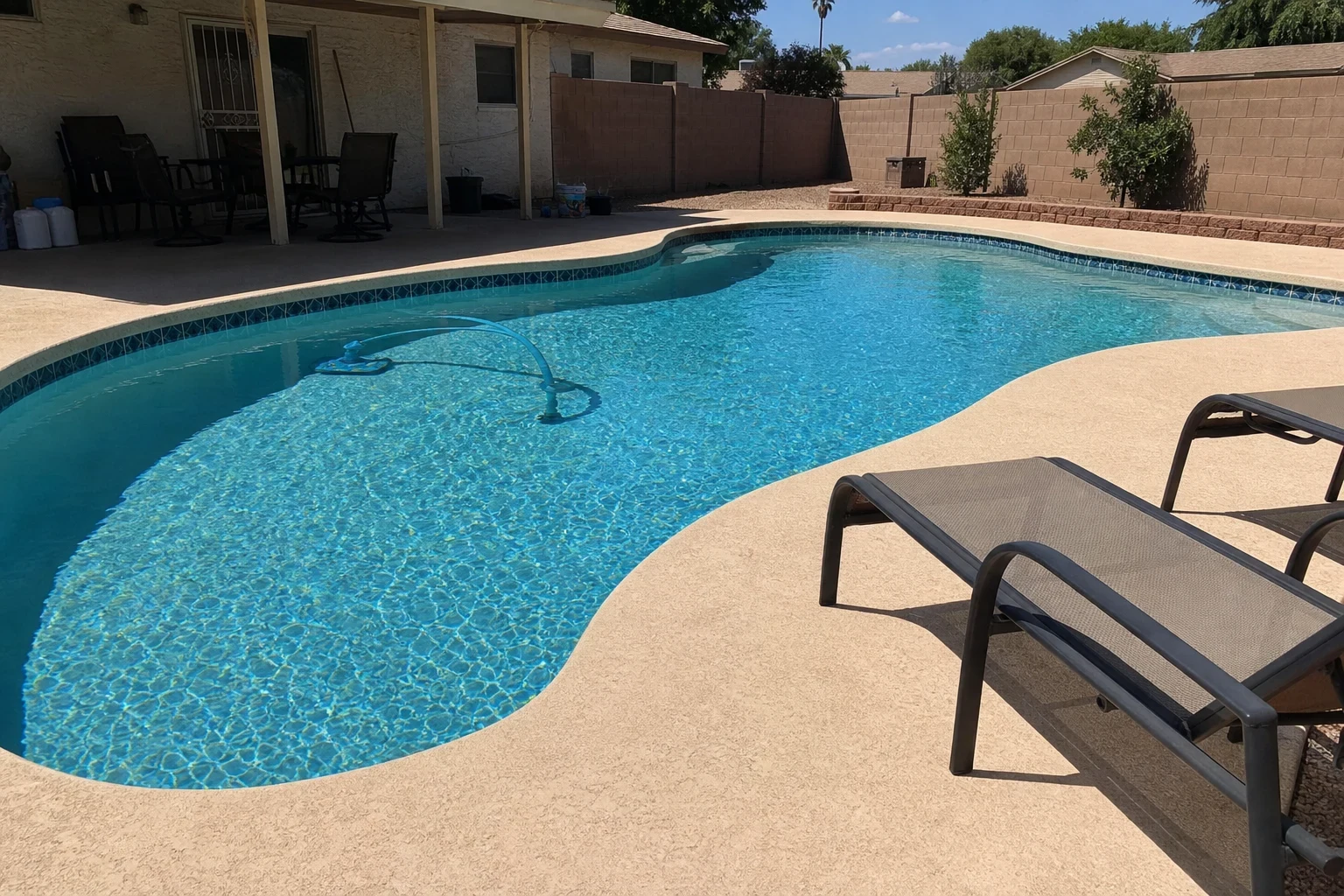
Call and describe what the pool is doing, plus roughly when it was last emptied. We'll tell you plainly whether draining is worth it, and the quote costs you nothing.