ServicesFilter Cleaning
Pool Filter Cleaning in Phoenix
Your filter catches the dust, pollen, sunscreen oil and scale that would otherwise cloud the water. When it clogs, flow drops and chemicals stop working well. We clean cartridge, D.E. and sand filters and tell you exactly what we found inside.
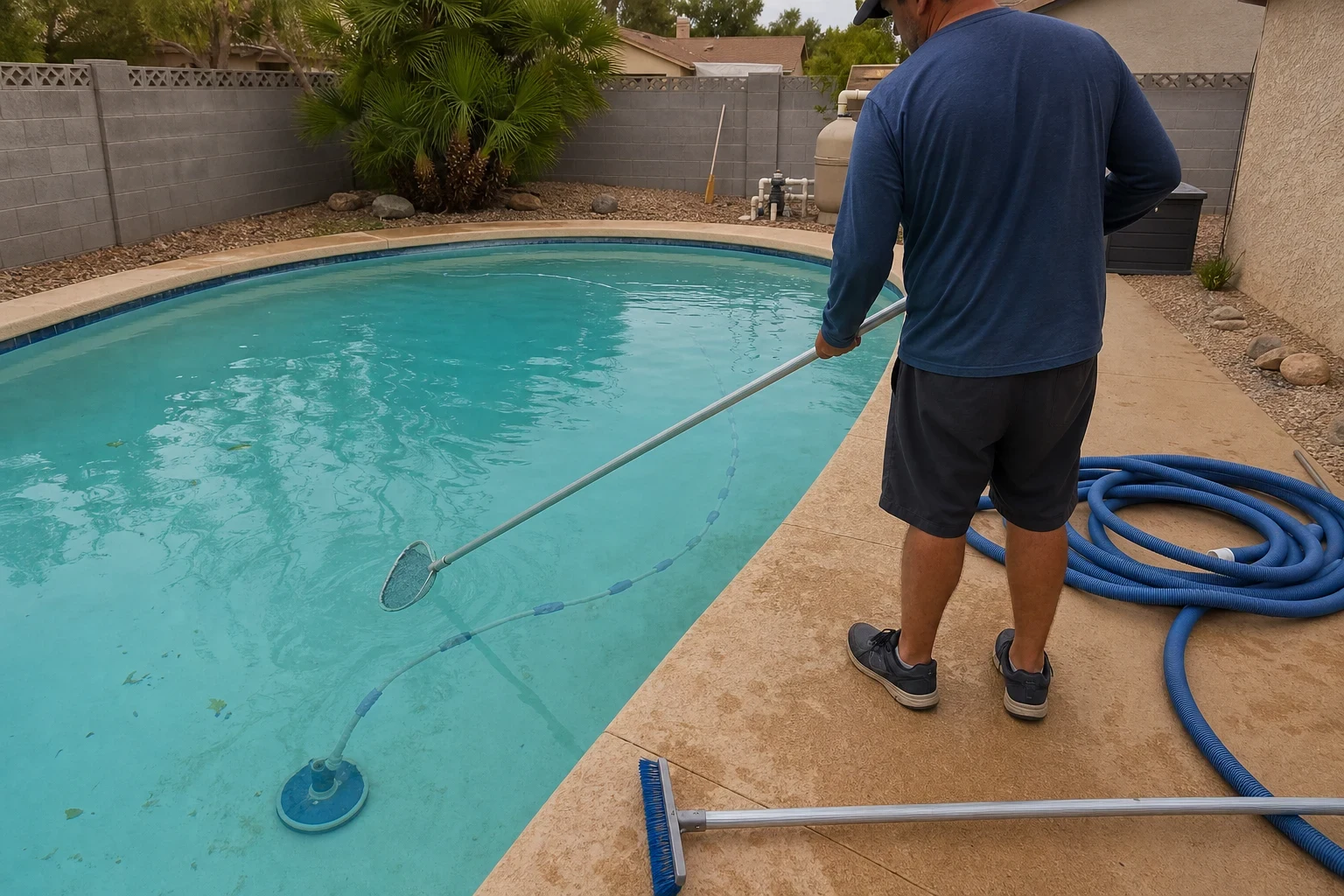
What a Filter Cleaning Actually Does
All pool filters follow one basic idea. The pump pushes water through a medium, which is either pleated polyester cartridges, fabric grids coated with diatomaceous earth (D.E.), or a bed of filter sand. Dirt stays behind and clean water goes back to the pool. As the medium fills, the pump has to push harder, and the pressure gauge on top of the tank rises.
When that gauge climbs roughly 8 to 10 psi past its clean baseline, the pump is moving a lot less water. Lower flow means slower turnover, weaker skimmer pull and chlorine spent on dirt the filter should have caught. A real cleaning drops the pressure back toward baseline and gets the water moving again.
A backwash does nothing for a cartridge filter and only partly clears D.E. and sand. Over months, oils, calcium and fine dust lock into the media. So we open the tank, look at every part and clean it by hand.
What Is Included in Our Filter Cleaning
Pressure reading before and after
With the pump running, we write down the gauge reading before any work begins and take a second reading once everything is back together. You get two numbers to compare instead of a promise.
Cartridge rinse and degrease
Each cartridge comes out and gets rinsed pleat by pleat, top to bottom. If sunscreen and body oil have built up, we add a degreasing soak, since plain water beads up and runs off that film.
D.E. grid teardown and recharge
We lift out the grid assembly, wash every grid, and look for torn fabric and a cracked manifold. Once it is reassembled, we add a fresh charge of D.E. measured to your filter's square footage.
Sand filter backwash and bed check
We backwash and rinse, then inspect the sand bed for channels or clumps formed by calcium and oils. If the sand is worn out, we explain how you can tell and what a sand change involves.
O-ring and seal inspection
We wipe down the tank O-ring, look it over for cracking or spots that have pressed flat, and coat it with silicone lubricant. An O-ring that has dried out is the usual culprit when a filter starts leaking or pulling air after being opened.
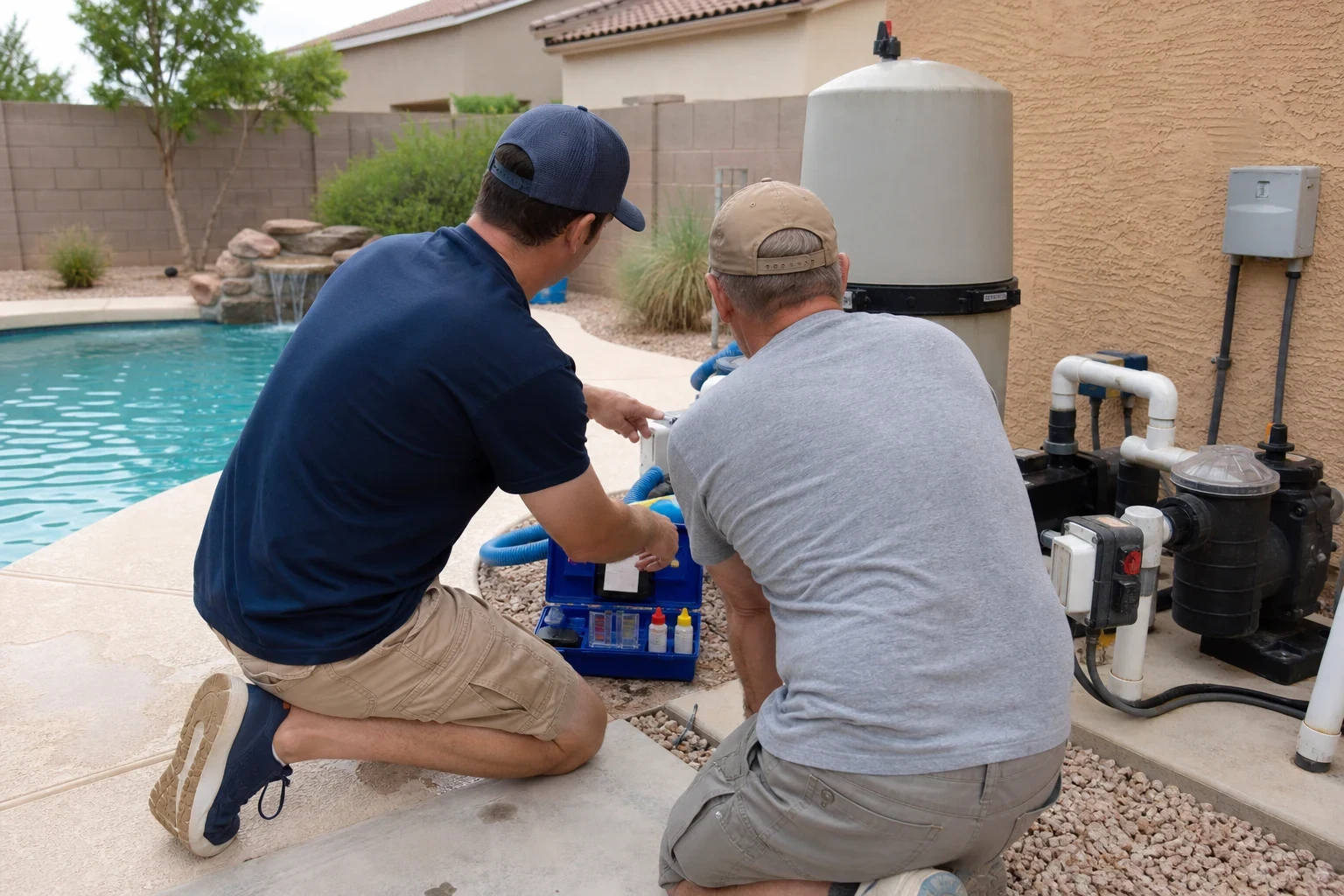
Signs Your Filter Needs Cleaning
- The gauge is 8 to 10 psi high
- Check today's number against what the gauge shows right after a cleaning. A jump in that range tells you the media is full and flow is dropping.
- Weak return jets
- Soft flow from the jets in the pool wall means water is getting held up at the filter. Full skimmer or pump baskets can do the same thing, so we rule those out first.
- Hazy water that tests fine
- If your chlorine and pH readings look right and the pool still looks milky, fine particles are likely slipping through the filter, or too little water is reaching it to catch them.
- D.E. puffs back into the pool
- A gray dusting on the pool floor after a backwash usually means a grid has torn or the manifold has cracked. Another backwash will not fix that; the filter needs to come apart.
- Nobody has opened it in months
- One monsoon dust storm can fill a filter in an afternoon. Most pools around your home need a full cleaning at least twice a year, and more after dusty summers.
How the Visit Goes
- 1
Read the system
We check the pressure gauge, the baskets and the return flow with the pump running, so we know the starting point.
- 2
Shut down and depressurize
We turn off the pump at the timer or breaker and open the air relief valve before releasing the tank clamp. Opening a pressurized tank is how lids and clamps fail, so this step never gets skipped.
- 3
Clean and inspect the media
Cartridges, grids or sand get cleaned as described above. We look for flattened pleats, cracked end caps, torn fabric and worn bands, and take photos of anything worn.
- 4
Reassemble, prime and test
We reseat the parts, lube the O-ring, close the tank and bleed out the air. Then we record the new pressure and walk you through what it means.
What Moves the Price
Filter cleaning is priced by the type and size of the filter and the shape it is in. We look at your equipment and give you a quote by phone or on site before any work starts. If a part needs replacing, we tell you first and explain why.
- Filter type
- A sand filter backwash is quick. A D.E. teardown with grid inspection and a fresh D.E. charge takes more time, and multi-cartridge filters fall in between.
- How loaded the media is
- Light dust rinses out. Heavy oil or calcium scale calls for a degreasing or descaling soak, which adds time and material.
- Worn parts
- Torn grids, cracked manifolds, collapsed cartridges or a split O-ring are replaced only with your approval. Cartridges with flattened pleats will never clean back to their original pressure.
- Access to the equipment pad
- Tight side yards, equipment behind locked gates or tanks wedged against a wall can add time to the job.
Filter Cleaning Questions
- How many times a year does a pool filter need cleaning?
- The gauge decides, not a date on the calendar. When the needle sits roughly 8 to 10 psi above where it rests on a clean filter, the media is loaded and due. For most pools in the Phoenix area that means two to four cleanings a year, plus one after a heavy dust storm.
- Can't I just backwash it?
- A backwash runs water backward through a sand or D.E. filter to flush loose dirt out the waste line. It leaves oils and calcium behind, and it gives you no look at a torn grid or cracked manifold. A cartridge filter has no backwash setting, so the cartridges have to come out and be cleaned by hand.
- When do cartridges need replacing instead of cleaning?
- A cartridge is done when its pleats have gone flat or frayed, an end cap has cracked, the support bands have snapped, or the gauge stays high even after a thorough cleaning. We hold up the cartridge, point to what we see and explain why it matters.
- Is filter cleaning part of weekly service?
- Our weekly pool cleaning covers baskets, brushing and water chemistry at every visit. Pulling the filter apart for a full cleaning is a separate job done when it is due, and we let you know when the gauge says so.
- Do you service filters outside Phoenix?
- Yes. We clean filters across the area, including Glendale, Scottsdale, Tempe and Litchfield Park. Mention your neighborhood when you phone and we will confirm it is on our route.
Find Out What Your Filter Needs
Let us know which filter sits on your equipment pad and the number on its gauge right now. From that we can explain what we expect inside the tank, what the cleaning will involve and what the free quote covers.