ServicesGreen to Clean Recovery
Green to Clean Pool Recovery in Phoenix
When your pool turns green, the algae has outrun the chlorine. We test the water to find out why, kill the bloom, filter out what is left and rebalance everything. You hear what went wrong and what keeps it from coming back.
What a Green to Clean Recovery Actually Fixes
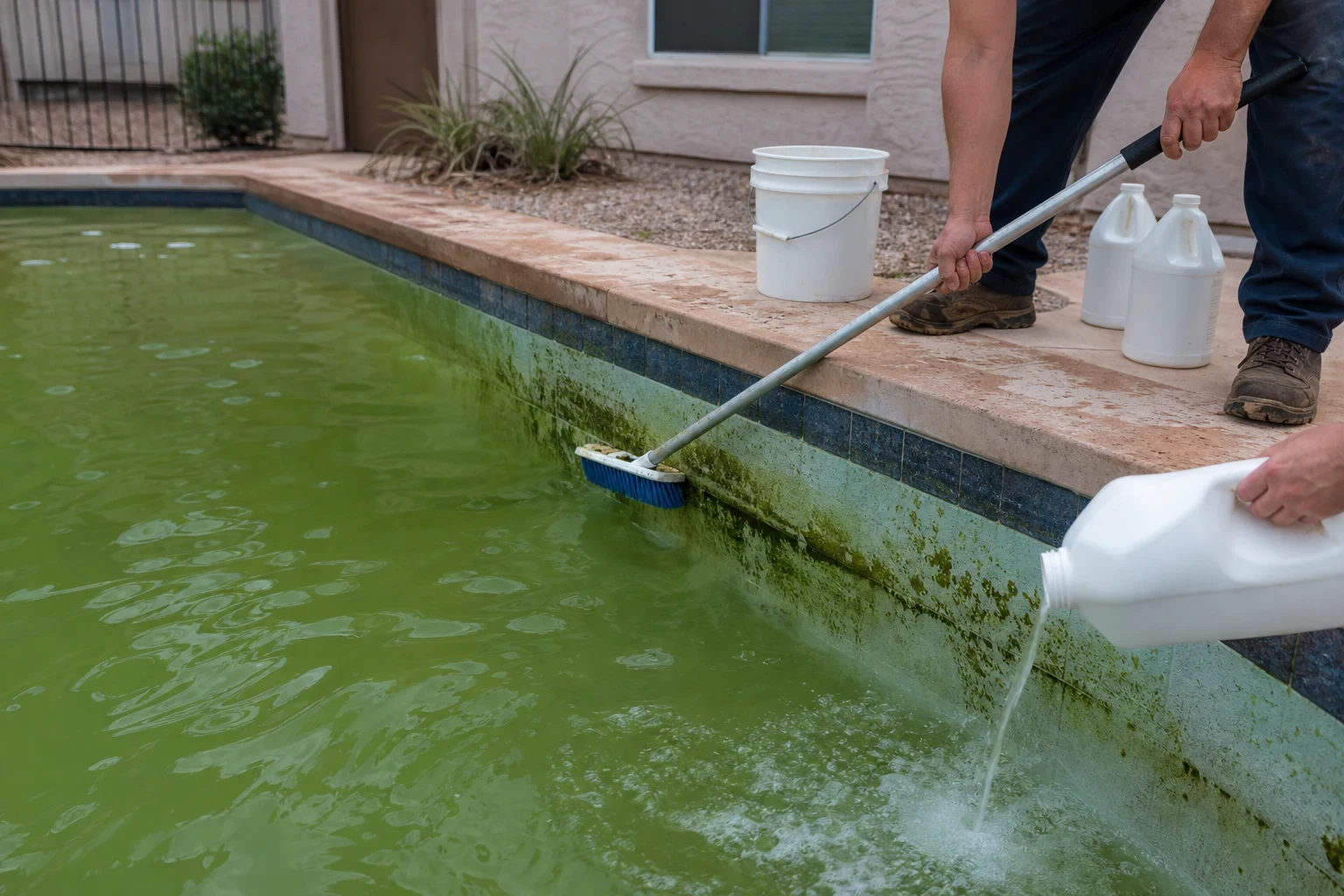
Green water is a living algae bloom. It happens when free chlorine drops to zero long enough for spores to multiply, usually after a pump failure, a missed week of service, a clogged filter or a storm that dumped dirt and leaves into the water. Once it starts, algae eats chlorine faster than a normal dose can replace it.
A recovery is more than dumping in shock. We raise chlorine to the level that actually kills the bloom, brush it off every surface so the chlorine can reach it and keep the filter clean while it pulls the dead algae out. Then we balance pH, alkalinity and calcium so the water stays clear.
We explain each step in plain English, including the one test that often decides the whole job: cyanuric acid, also called stabilizer. If it has built up too high, chlorine stops working well, and you deserve to know that before we start.
What the Recovery Includes
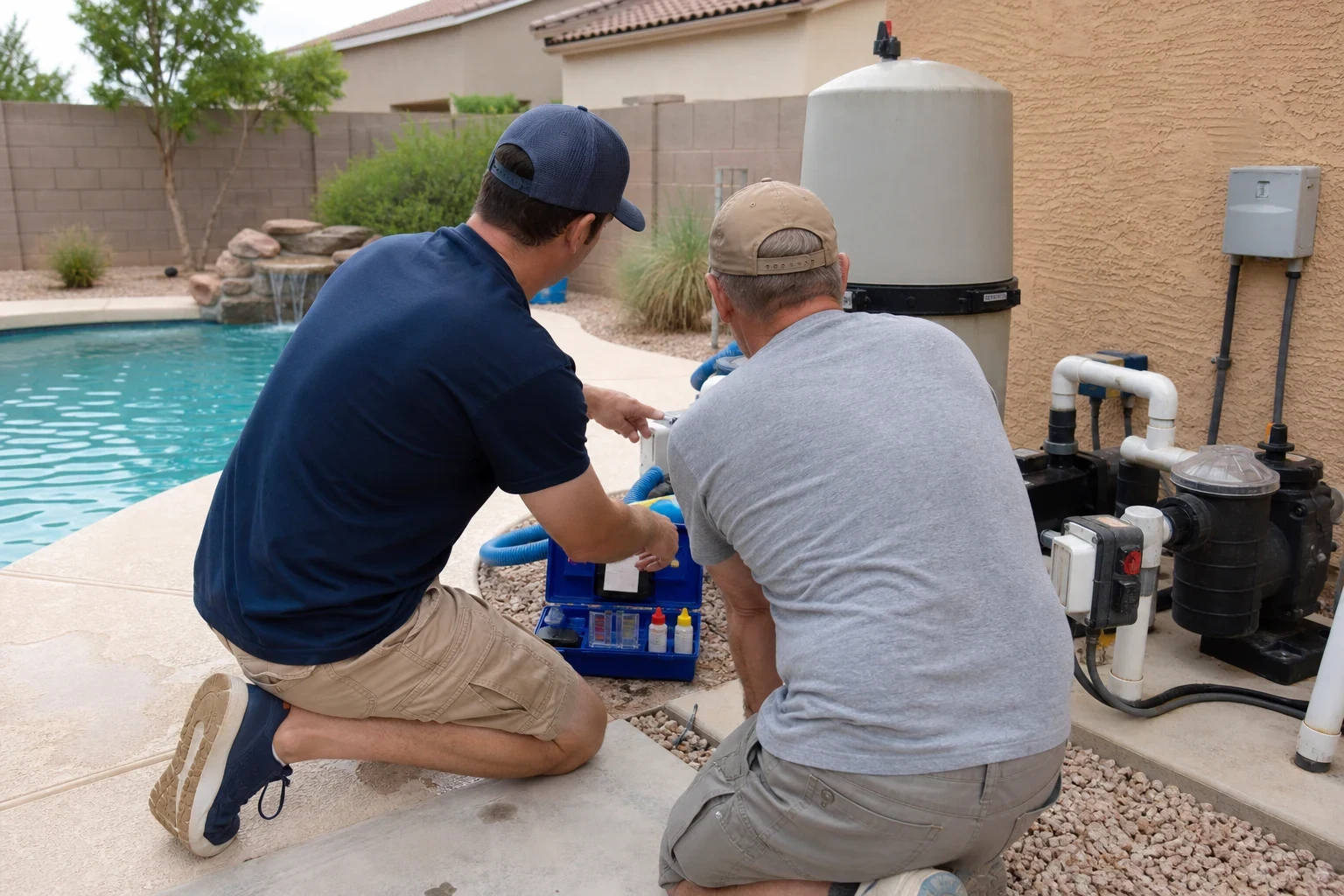
Full water test before treatment
We check five readings: chlorine, both the free kind that is working and the combined kind that is used up, plus pH, alkalinity, calcium and stabilizer. Together they show how much chlorine the job will take and whether a partial drain is needed to save the water.
Debris removal
Leaves, palm fronds and sludge on the floor feed algae and soak up chlorine. We net them out first so the shock goes to work on the algae instead.
Shock to breakpoint with liquid chlorine
We use liquid sodium hypochlorite because it adds no extra stabilizer to the water. The dose is sized to your pool's gallons and its stabilizer level, then held until the chlorine stops dropping overnight.
Brushing walls, floor and steps
Algae clings to plaster and hides in corners, behind ladders and on step edges. Brushing breaks up that protective layer so the chlorine can reach it.
Repeated filter cleaning
Dead algae clogs a cartridge, sand or DE filter fast, and a clogged filter slows circulation. We clean or backwash it as often as the job requires, sometimes more than once on the same visit.
Final vacuum and rebalance
Once the water turns from green to gray to clear, we vacuum settled debris, often to waste so it skips the filter, and set pH and alkalinity where they belong.
When a Green Pool Needs More Than a Shock
- The deep-end drain has disappeared
- When the main drain looks fuzzy or you can't find it at all, the water holds more algae or floating debris than a routine chemical dose can handle.
- Green, teal or cloudy tint
- A faint green cast is an early bloom. Murky pea-soup water means it has been growing for days.
- Slick, slimy walls
- If the plaster feels slippery when you run a hand along it, algae is coating the surface even when the water still looks fairly clear.
- Yellow dust or dark spots
- Yellow-brown powder in shady corners is often mustard algae. Black dots with raised edges are black algae, which roots into plaster and needs heavy brushing.
- Chlorine reads zero after you add it
- When chlorine disappears overnight, something is consuming it. That is usually algae, or stabilizer high enough to slow chlorine down.
How the Recovery Goes, Visit by Visit
- 1
Test and explain
We test the water, check that the pump and filter are running properly and tell you what we found. If stabilizer is too high or the equipment needs work, you hear that up front.
- 2
Clear, brush and shock
We remove debris, brush every surface and add the chlorine dose your pool's numbers call for. The pump runs continuously from here so the water keeps moving through the filter.
- 3
Follow-up visits
Over the next few days we retest, add chlorine as needed, brush again and clean the filter. The water usually turns gray or milky as the algae dies, which means the treatment is working.
- 4
Clear water and balance
When the water clears and chlorine holds overnight, we vacuum the floor, balance pH, alkalinity and calcium and tell you what to expect going forward.
What Moves the Cost of a Recovery
No two green pools need the same amount of work. We start with a free quote over the phone, based on what you describe, and check it against the water itself on the first visit. The final number comes down to how much chlorine, labor and filter work the job takes.
- How far gone the water is
- A light green tint may clear in a couple of visits. Black, swampy water with heavy sludge on the floor takes more chlorine, more brushing and more trips.
- Pool size
- Chlorine is dosed by the gallon, so a larger pool simply needs more product to reach a killing level.
- Stabilizer level
- Years of chlorine tablets add cyanuric acid that never evaporates. If it is very high, a partial drain through our pool drain and refill service may cost less than fighting it with extra chlorine.
- Filter and equipment condition
- A torn cartridge, worn sand or a pump that won't prime slows everything down. We'll point it out, and pool repair or filter cleaning may become part of the plan.
Green Pool Questions
- How long does it take to clear a green pool?
- Most pools clear in three to five days, depending on how dense the algae is and how well the filter keeps up. Black algae and very high stabilizer can stretch it longer. We tell you what to expect after the first test.
- Why did my pool turn green in the first place?
- Chlorine fell to zero long enough for algae to grow. Common causes are a pump timer set too short, a clogged filter, missed treatments or high stabilizer from chlorine tablets. Phoenix summer heat burns off chlorine fast, so a few days without attention can be enough.
- Will the pool need to be drained?
- In most cases, no. A drain only makes sense when stabilizer or calcium has climbed past what chemicals can bring down, and you see that test number before we suggest it. Emptying a pool in hot weather can also crack or pop plaster, which is one more reason we treat it as a last resort.
- Can we swim while you're treating it?
- No. Chlorine levels during a recovery are far above swimming range, and cloudy water hides the floor, which is a safety risk. We let you know when chlorine has dropped back to a normal level.
- How do I keep it from happening again?
- Keep chlorine steady, keep the filter clean and give the pump enough run time each day. Our weekly pool cleaning handles all three, and the chemicals come included in the monthly price. Your first month of weekly visits costs nothing, and you sign no contract, so stopping service is up to you at any point.
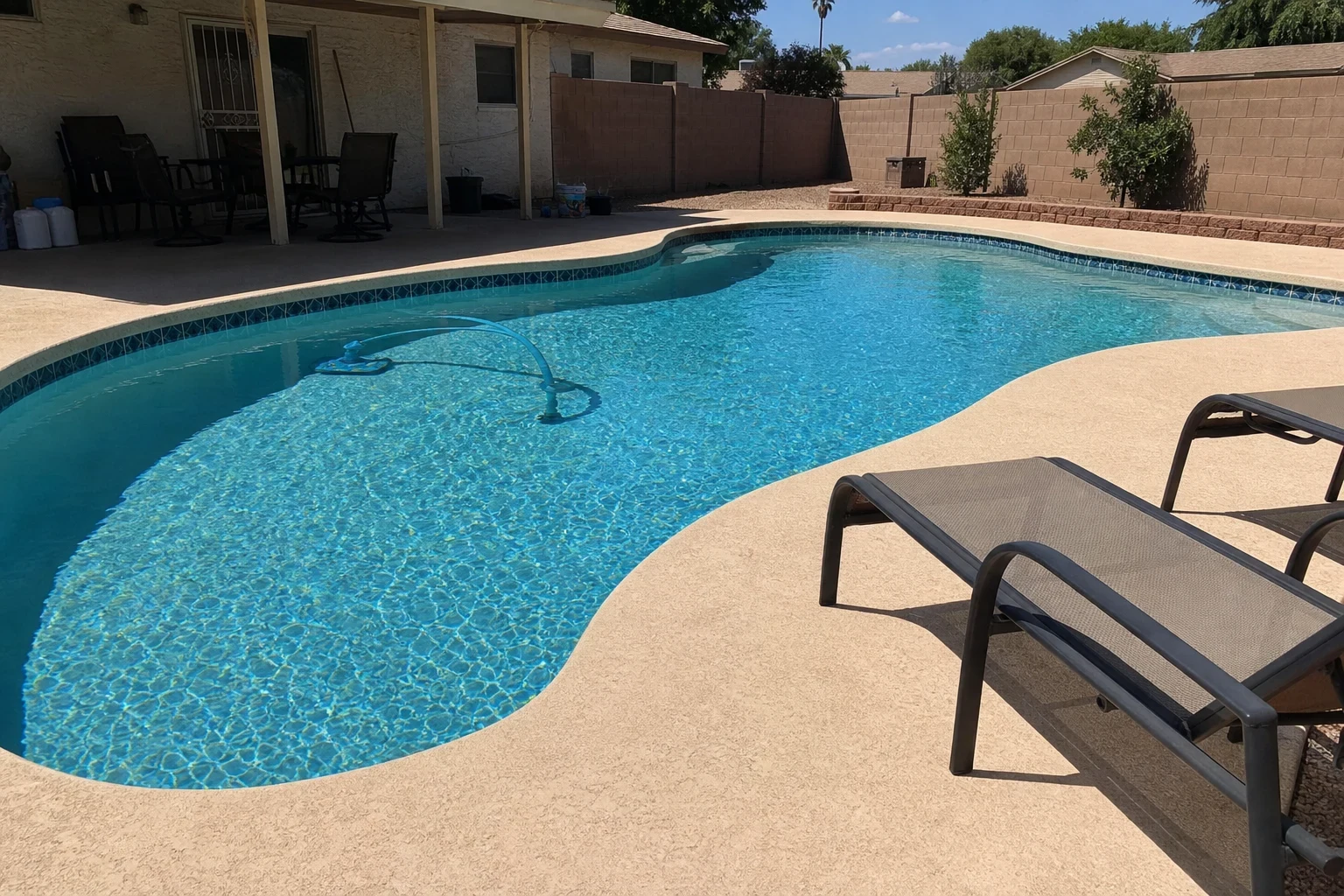
Get Your Green Pool Back to Clear
Describe the color of the water and roughly when it started turning. From there we can walk you through what probably caused it and put together a free quote over the phone.